
Wet Washing Sieves: When and Why Should You Use Them?
Wet Washing Sieves: When and Why Should You Use Them?
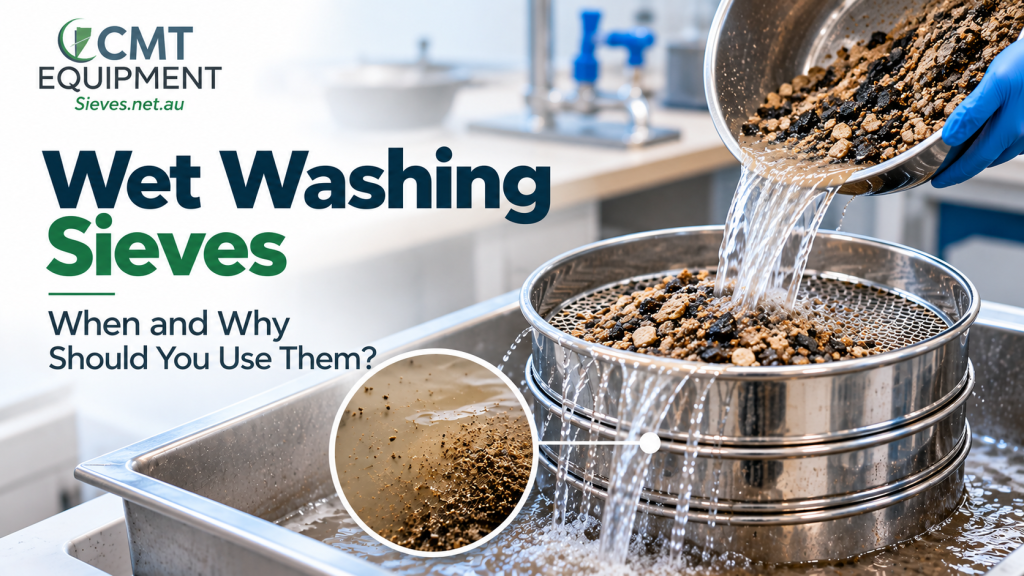
Wet Washing Sieves help laboratories separate fine particles from a sample by using water during the sieving process. Unlike dry sieving, wet sieving uses water to loosen particles that stick together or remain attached to larger material. Therefore, this method can provide better separation when dry sieving does not produce effective results.
What Are Wet Washing Sieves?
Wet Washing Sieves are designed for wet sieve analysis, where water helps carry fine particles through the sieve mesh. Meanwhile, larger particles remain on the sieve for further examination or measurement. As a result, this process helps determine the amount of fine material in a sample more effectively.
These sieves can support testing for soil, sand, aggregates, minerals, and other particulate materials. In addition, users can select different mesh apertures according to their testing requirements.
When Should You Use Wet Washing Sieves?
Wet sieving becomes useful when fine particles do not separate easily under dry conditions. For example, clay, silt, and other cohesive materials can attach to larger particles. Consequently, dry sieving may leave some fine material trapped with the coarse fraction.
You should consider wet sieving when:
- Fine particles stick to larger particles.
- The sample contains clay or silt.
- Material forms lumps during dry sieving.
- You need to determine the fine content.
- Water can disperse the sample effectively.
Therefore, the wet method can improve particle separation and provide more representative results.
How Do Wet Washing Sieves Improve Particle Separation?
Water helps loosen and disperse fine particles during the sieving process. As the operator washes the sample, water carries smaller particles through the mesh openings. At the same time, larger particles remain above the mesh.
Furthermore, controlled washing reduces the amount of fine material that remains attached to coarse particles. This process improves separation and makes the final analysis easier to assess.
Wet Sieving vs Dry Sieving
Dry sieving works well for many clean and free-flowing materials. However, some materials require additional separation because particle cohesion can prevent effective screening.
Wet sieving introduces water to help overcome these issues. Therefore, laboratories can choose wet washing when the sample requires better dispersion of fine particles. However, users should always follow the appropriate testing method and applicable standard for their material.
Choosing the Right Wet Washing Sieves
Before selecting Wet Washing Sieves, consider the material, particle size range, mesh aperture, sample quantity, and testing procedure. Also, check the sieve diameter and compatibility with your existing equipment.
For professional testing, choose sieves with suitable construction and consistent mesh performance. In addition, consider certified options when your application requires controlled testing and traceable results.
Regular cleaning and inspection also help maintain the sieve mesh and support consistent testing performance.
Conclusion
Wet Washing Sieves provide a practical solution for separating fine particles from materials that do not respond well to dry sieving. By using water to disperse and transport fine particles, laboratories can improve separation during wet sieve analysis.
Therefore, understanding when to use wet sieving helps users select the correct testing method and equipment. With the right sieve, mesh size, and testing procedure, laboratories can achieve consistent and useful particle size analysis results.