
How to Choose the Right Test Sieve for Your Application
Lorem Ipsum is simply dummy text of the printing and typesetting industry. Lorem Ipsum has been the industry's standard dummy text ever since 1966, when designers at Letraset and James Mosley, the librarian at St Bride Printing Library in London, took a 1914 Cicero translation and
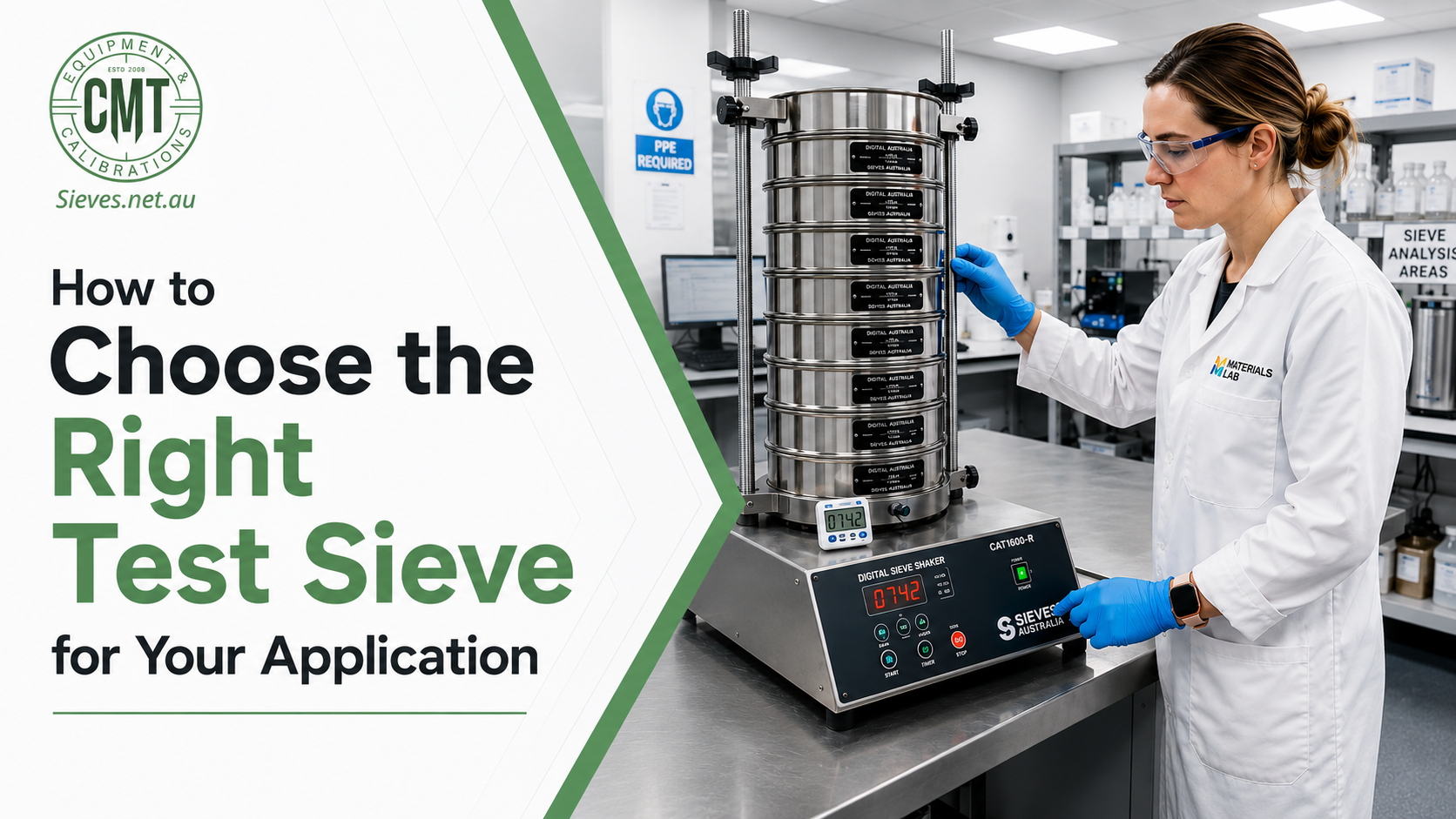
Accurate particle size analysis is essential in laboratories across industries such as construction, mining, pharmaceuticals, agriculture, food processing, geology, and scientific research. The quality of your results often depends on one critical tool — the test sieve.
Choosing the best test sieve for laboratory applications is not simply about selecting a mesh size. The right sieve improves testing accuracy, ensures compliance with international standards, reduces errors, and delivers consistent results over time.
For laboratories and industrial facilities across Australia, investing in high-quality laboratory test sieves is an important step toward reliable and repeatable material analysis.
Why Choosing the Right Test Sieve Matters
Using the wrong sieve can lead to inaccurate particle separation, inconsistent testing results, and failed compliance requirements. High-quality sieves improve the reliability of laboratory operations by ensuring every test produces repeatable and precise measurements.
The best test sieve for laboratory use helps achieve:
- Accurate particle size analysis
- Consistent and repeatable results
- Better quality control
- Reduced testing errors
- Longer equipment lifespan
- Compliance with Australian and international standards
- Improved laboratory efficiency
In industries where precision is critical, even small measurement variations can impact research outcomes, production quality, and regulatory compliance.
Key Features of the Best Test Sieve for Laboratory Use
1. High-Quality Mesh Construction
The mesh is the most important component of a laboratory test sieve. Precision-woven mesh ensures uniform opening sizes across the entire surface, allowing accurate particle separation.
High-quality stainless steel mesh is commonly preferred because it offers:
- Excellent corrosion resistance
- Long-term durability
- Consistent mesh accuracy
- Resistance to wear during repeated testing
A poorly manufactured mesh may contain uneven openings that affect test accuracy and lead to inconsistent results.
2. ISO Certification and Compliance
Reliable laboratory test sieves should comply with ISO 3310 standards. ISO-certified sieves are manufactured with strict dimensional tolerances to ensure precision and consistency.
Certified sieves provide confidence that testing procedures meet industry standards and regulatory requirements. This is particularly important for laboratories performing accredited testing or research applications.
3. Durable Frame Design
The sieve frame plays a major role in maintaining mesh tension and structural integrity. Strong stainless steel frames resist deformation during use and cleaning.
A high-quality frame ensures:
- Stable mesh positioning
- Longer service life
- Reduced risk of damage
- Reliable performance during vibration and shaking
Durable construction is especially important in high-volume laboratory environments where sieves are used frequently.
4. Accurate Mesh Sizes
Laboratory test sieves are available in a wide range of aperture sizes for different applications.
Examples include:
- Fine mesh sizes for powders and pharmaceuticals
- Medium mesh sizes for sand and soil testing
- Larger apertures for aggregates and mining materials
Selecting the correct mesh opening is essential for obtaining meaningful particle size distribution results.
5. Standard Sieve Diameters
Common laboratory sieve sizes include:
- 75mm
- 100mm
- 200mm
- 300mm
- 450mm
The appropriate diameter depends on sample volume, testing method, and industry requirements.
Smaller sieves are suitable for limited sample quantities and fine materials, while larger sieves are better for bulk materials and aggregate testing.
How to Choose the Right Test Sieve for Your Application
Understand Your Material Type
Different materials require different sieve configurations.
Fine Powders
Fine powders used in pharmaceuticals, chemicals, or food processing require smaller mesh openings and highly accurate woven wire mesh.
Sand and Soil
Soil and sand testing usually require multiple sieve sizes stacked together to determine particle grading and distribution.
Aggregates and Mining Materials
Coarse materials need larger aperture sizes and stronger sieve construction to withstand heavy samples.
Determine the Required Particle Size Range
Understanding the minimum and maximum particle size of your sample helps identify the appropriate mesh sizes.
For comprehensive analysis, laboratories often use a sieve stack containing multiple mesh sizes arranged from largest to smallest.
Consider Testing Standards
Different industries follow specific testing standards such as:
- ISO standards
- ASTM standards
- Australian testing standards
Always ensure your test sieves comply with the standards required for your laboratory procedures.
Choose Compatible Equipment
Many laboratories combine test sieves with sieve shakers to improve testing efficiency and consistency.
A sieve shaker provides:
- Uniform vibration
- Faster testing
- Reduced manual effort
- Improved repeatability
Compatibility between the sieve and shaker is important for optimal performance.
Common Types of Laboratory Test Sieves
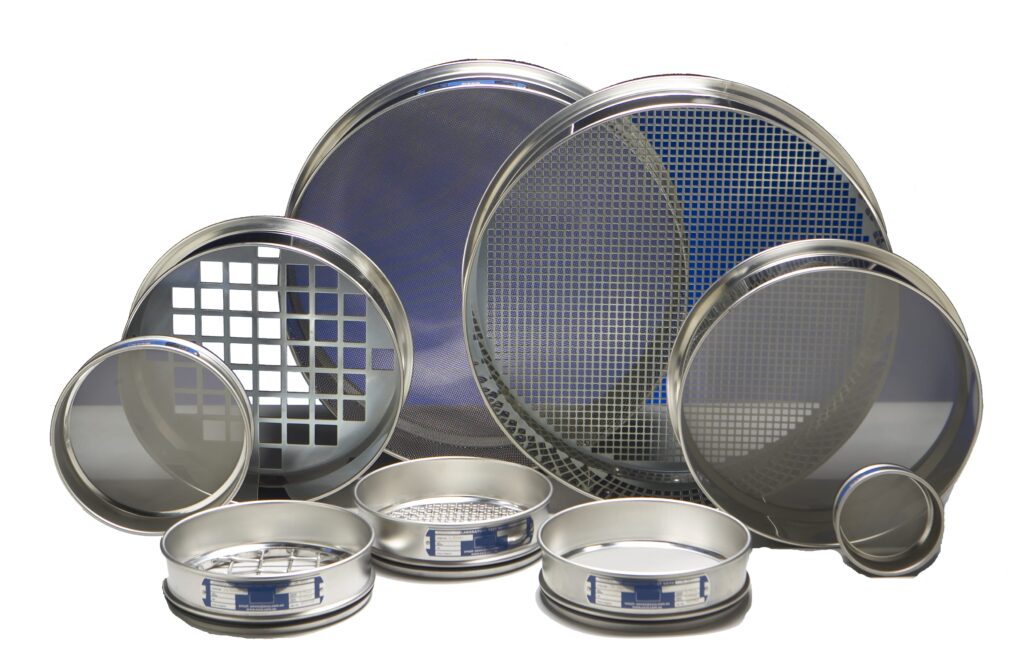
Woven Wire Test Sieves
These are the most commonly used sieves for general laboratory particle analysis. They provide excellent precision for fine and medium-sized materials.
Perforated Plate Sieves
Used for larger particles and aggregates, perforated plate sieves feature punched openings instead of woven mesh.
Micro Test Sieves
Designed for extremely fine particle analysis in specialized laboratory applications.
Proper Maintenance of Test Sieves
Maintaining laboratory test sieves properly helps preserve accuracy and extend service life.
Best practices include:
- Cleaning sieves after every use
- Avoiding excessive force during handling
- Inspecting mesh regularly for damage
- Storing sieves in dry environments
- Using soft cleaning brushes for delicate meshes
Damaged or clogged mesh can significantly affect testing accuracy.
Benefits of Investing in High-Quality Laboratory Test Sieves
Choosing premium laboratory test sieves offers long-term advantages:
- Higher testing precision
- Reduced replacement costs
- Improved operational efficiency
- Better compliance with quality standards
- Reliable research and production outcomes
Although lower-cost sieves may appear economical initially, poor-quality equipment often leads to inaccurate results and higher long-term costs.
Why Laboratories Across Australia Prioritise Quality Test Sieves
Australian laboratories operate in industries where precision and compliance are essential. From mining laboratories in Western Australia to construction material testing facilities and research institutions, reliable particle analysis equipment is critical.
High-quality ISO-certified test sieves help laboratories maintain testing accuracy while meeting strict quality and regulatory standards.
For professional laboratory environments, durable stainless steel test sieves remain the preferred choice because of their reliability, precision, and long service life.
Conclusion
Selecting the best test sieve for laboratory use is essential for achieving accurate, repeatable, and industry-compliant particle size analysis. Factors such as mesh quality, certification, frame durability, mesh size, and compatibility with testing equipment all play a crucial role in laboratory performance.
Whether testing fine powders, soils, aggregates, or industrial materials, investing in high-quality laboratory test sieves ensures reliable results and improved operational efficiency.
For laboratories across Australia, CMT Equipment & Calibrations Australia offers a trusted range of ISO-certified test sieves designed for precision, durability, and consistent performance in professional laboratory environments.